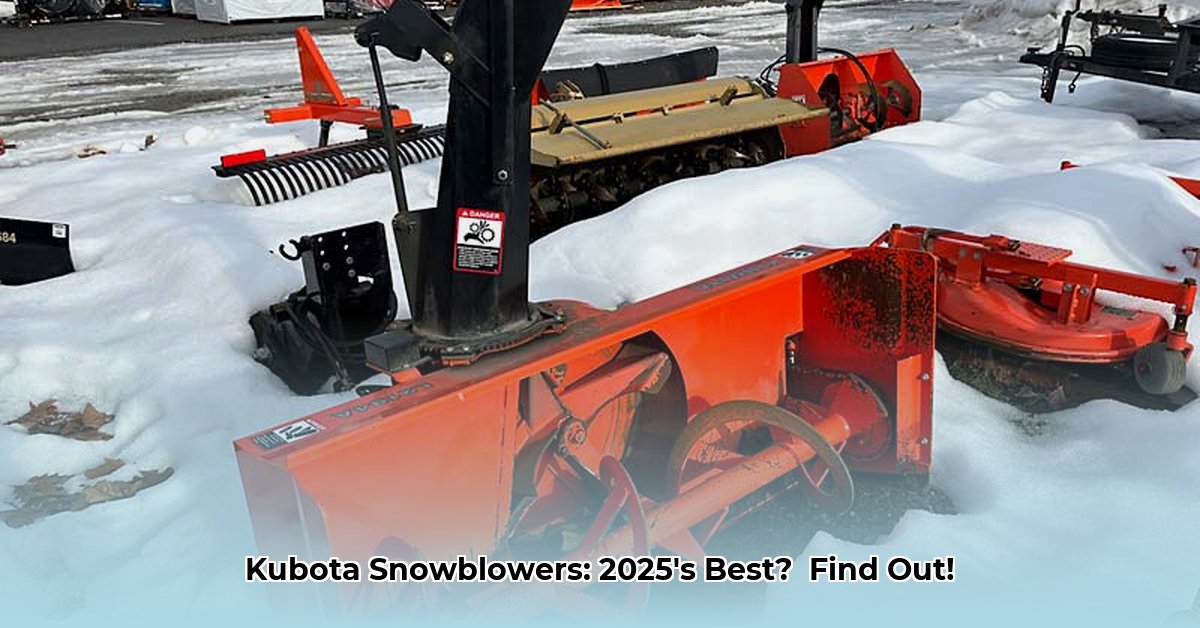
Dreading the next blizzard? This guide helps you navigate the world of Kubota front-mount snowblowers, ensuring you choose the perfect model for your needs and budget in 2025. We'll cover key features, compare Kubota to competitors, and provide essential maintenance tips. Let's tackle those snowdrifts with confidence! For more options, explore tractor snow blowers.
Figuring Out Your Needs: A Personalized Approach
Before exploring specific Kubota models, assess your individual circumstances. Consider these factors:
- Property Size: A small driveway requires a different snowblower than a large farm or commercial lot. The area you need to clear directly impacts the necessary blower capacity.
- Snowfall: Do you typically get light, fluffy snow, or heavy, wet accumulations? Heavier snow demands a more powerful machine.
- Budget: Kubota snowblowers, while durable, represent an investment. Establish a realistic budget before you begin your search.
- Tractor Compatibility: Ensure your tractor has the necessary horsepower and hydraulic capacity for the chosen snowblower. This is critical for proper operation and safety.
Key Features: Decoding the Specs
Understanding key snowblower specifications is crucial for making an informed decision. Here's what to look for:
- Capacity (CFM): Cubic feet per minute (CFM) indicates the volume of snow the blower can move. Higher CFM means faster clearing, especially beneficial for large areas or heavy snowfall. Think of it as the "horsepower" of your snow-clearing operation.
- Impeller Design: The impeller's size and design significantly affect the blower's efficiency. A well-designed impeller efficiently throws snow, minimizing clogs and maximizing performance. Look for impellers made from durable materials designed to handle wear and tear.
- Chute Adjustment: An adjustable chute allows you to direct the snow away from obstacles. Hydraulically controlled chutes are the most convenient, offering effortless adjustments, even while wearing gloves.
- Hydraulic System: A smooth, responsive hydraulic system is essential for ease of use and control, particularly during extended snow removal sessions. Look for a system with consistent performance and ease of operation.
Kubota Snowblower Models: Examples and Considerations
While specific models vary by year and availability, here are example characteristics to illustrate the range of Kubota offerings. Always refer to Kubota's official website for the most current information:
| Model (Example) | Approximate Capacity (CFM) | Key Features | Best Suited For |
|---|---|---|---|
| SBX123 (Example) | Around 400 CFM | Heavy-duty auger, electronically controlled chute, powerful hydraulics | Large properties, commercial applications, tough snows |
| SBX78 (Example) | Around 250 CFM | Lighter-duty auger, simpler controls, more affordable | Smaller properties, residential use, less frequent snow |
Disclaimer: These are illustrative examples. Kubota's product line is subject to change. Always consult the official Kubota website or your local dealer for the most up-to-date information and availability.
Kubota Front Mount Snowblowers: Advantages and Considerations
Advantages:
- Superior Visibility: Front mounting provides excellent visibility, enhancing safety and precision during operation. You can always see where you're throwing the snow.
- Maneuverability: Front-mounted blowers offer exceptional maneuverability, perfect for navigating tight spaces or uneven terrain.
- Ease of Use: Many Kubota models feature user-friendly controls, making them accessible to both experienced and novice operators.
- Durability: Kubota is known for its robust construction, ensuring longevity and dependable performance. These machines are built to withstand years of winter use.
Considerations:
- Cost: Kubota snowblowers often command a higher price than some competitors.
- Model Selection: The range of available Kubota models might be more limited than some other brands.
Maintenance: Ensuring Peak Performance and Longevity
Proper maintenance is vital for maximizing the life and efficiency of your Kubota snowblower.
- Pre-Season Inspection: Before the first snowfall, carefully inspect the snowblower for any damage. This ensures everything is in optimal condition.
- Post-Use Cleaning: After each use, clear away any accumulated snow or ice to prevent damage and corrosion.
- Lubrication: Regularly lubricate moving parts according to Kubota's recommendations. This is key to smooth operation and a longer lifespan.
- Blade Sharpness: Maintain sharp auger blades and impellers for optimal snow removal efficiency. Dull blades reduce effectiveness and increase strain on the machine.
- Safety Precautions: Always wear appropriate safety gear, including goggles and gloves, while operating the snowblower. Never operate the machine without proper training and awareness of safety guidelines.
This buyer's guide provides a comprehensive overview. However, consult your local Kubota dealer for personalized advice and to discuss models best suited to your specific requirements. They are your best resource for selecting the perfect machine for your needs.
Comparing Kubota to Competitors: A Strategic Approach
Choosing between Kubota and its competitors requires careful consideration of various factors. This section outlines a step-by-step process for effective comparison shopping.
Understanding Your Snow Removal Needs
Before comparing specific models, honestly assess your snow removal needs. Consider the following:
- Snow Volume: How much snow do you typically receive?
- Area to Clear: How large is the area you need to clear?
- Budget: Set a realistic budget to guide your search.
- Tractor Capabilities: Ensure your tractor is compatible with the chosen snowblower.
Key Features for Comparison
When comparing Kubota to competitors (e.g., Land Pride, Woods Equipment), focus on these features:
- Power and Capacity: Compare horsepower and CFM ratings to match your needs and tractor capabilities. Higher ratings generally mean faster and more efficient snow clearing.
- Blower Type: Single-stage blowers are suitable for lighter snow, while two-stage blowers handle heavier, wetter snow better. This is often a key determining factor.
- Chute Rotation: Hydraulically-operated rotation is far superior to manual systems in terms of convenience and ease of use.
- Build Quality: Invest in robust construction for durability and longevity. Look for heavy-duty materials and components.
- Attachments and Compatibility: Ensure compatibility with your tractor and PTO system.
Evaluating Value: A Holistic Perspective
Value extends beyond the initial purchase price. Factor in:
- Maintenance Costs: Estimate long-term maintenance and repair expenses.
- Downtime: Consider the potential for downtime and its impact on your operations.
- Resale Value: Kubota's reputation for durability often translates to better resale value.
- Customer Reviews: Research online reviews and testimonials for insights into real-world performance and reliability.
Step-by-Step Guide to Comparison
- Assess Your Needs: Define your snow removal needs, including snow volume, area to clear, and budget.
- Research Models: Identify Kubota and competitor models that meet your criteria.
- Compare Specs: Carefully compare horsepower, capacity, blower type, chute rotation, build quality, and compatibility.
- Review Feedback: Read customer reviews and testimonials for real-world insights.
- Consider Long-Term Costs: Estimate long-term maintenance, repair, and potential downtime expenses.
- Make Your Decision: Choose the model that best balances performance, durability, and value based on your specific needs and budget.